Category Archives: Non-native

Plant of the day: golden wattle

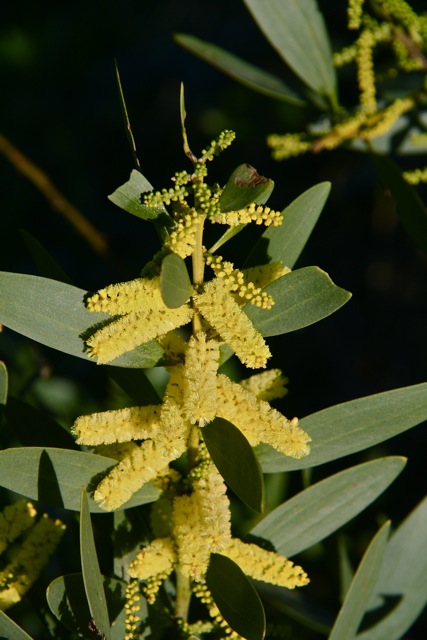
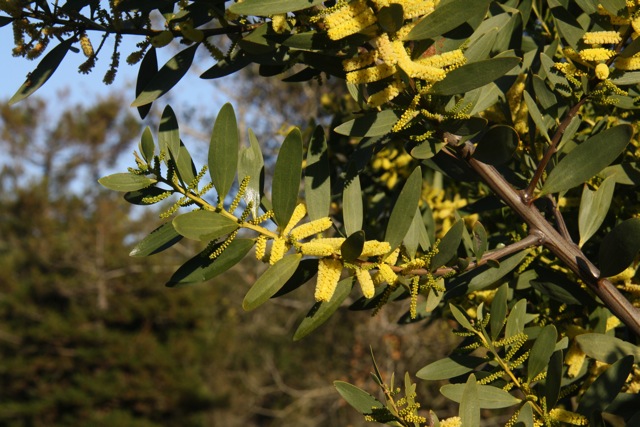
Acacia_longifolia21This small tree boasts little yellow bottle-brush flowers scattered among long, blade-shaped leaves. Sydney golden wattle (Acacia longifolia) is native to Australia, but has naturalized here in southern and central California. It is distinguished from many of the Acacias by having leaves that aren’t feathery or divided, and also by having long rod-shaped spikes of flowers, instead of puffy pom-pom-shaped balls.

The golden wattle is a fast growing plant, and is used in Australia and other countries to stop erosion. This member of the Fabaceae family can fix nitrogen through a symbiotic relationship with bacteria that live in nodules in its roots. The flowers, seed and seed pot are all edible. The cooked flowers have a light fragrance and are used in fritters. Flowers also can be used to make a yellow dye, and the seed pods make a green dye.

None of the Acacias are native, and many are invasive here in California.Acacia_longifolia1
Leave a comment

Filed under Non-native, Plant of the day

Plant of the day: bigleaf periwinkle

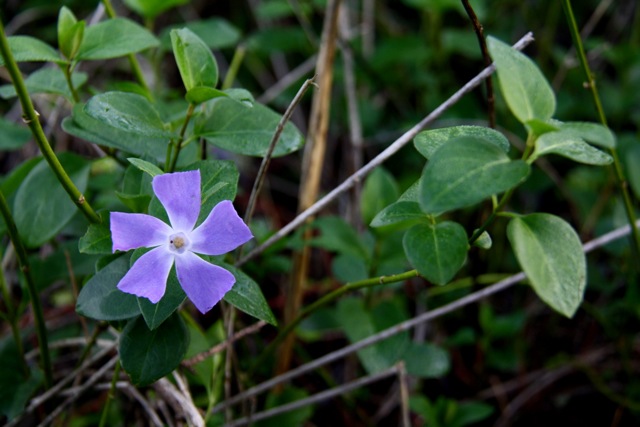
You know those moments where you think you know something–until suddenly you realize you don’t? Well this happened to me recently with periwinkle. I’ve seen this shrubby, large-flowered vine my entire life, but it wasn’t until I went to key it out that I realized I didn’t know its name. And when I finally came to periwinkle I couldn’t have been more surprised. This familiar plant is periwinkle? The periwinkle of literature, of blues and eyes and dresses? I always thought it would be some delicate British daisy; instead, it’s this coarse and common invasive!Vinca_major1

The bigleaf periwinkle of real life is Vinca major, a dark-leaved vine with a milky, sticky sap. This  invasive ground cover escaped from garden plantings and now is creeping across the U.S. In California you can see it in coastal areas, foothill woodlands, the Central Valley, and even in the desert. It forms dense mats, crowding out natives, and can resprout from bits of broken stem or root–a particular problem because it likes to grow on stream banks, where it regularly gets washed away in high water, taking root wherever the broken piece lands.

Leave a comment

Filed under Non-native, Plant of the day

Plant of the day: sourgrass

Oxalis_pes-capre1You’ll see it nodding its lemony-yellow flowers along sidewalks and wild trails. Most little kids will recognize the clover-like leaves and smooth green stem. This is sourgrass (Oxalis pes-capre), an invasive with a pleasantly tart and tasty flavor.

Also known as Bermuda buttercup, buttercup oxalis, and yellow oxalis, this little plant was introduced as an ornamental from South Africa and now is found throughout coastal California, as well as in Arizona and Florida. The flowers, stems and leaves are all edible and make a nice trailside snack, or addition to a salad.

Leave a comment

Filed under Edible, Invasive, Non-native, Plant of the day

Plant of the day: gorse

I spotted these mounded, dark green bushes covered with yellow flowers as I drove north on Highway One.

This slideshow requires JavaScript.

This is gorse (Ulex europaeus), a nasty invasive with yellow pea-like flowers and unpleasant spikes instead of leaves. It was introduced–perhaps deliberately–from western Europe, where I have heard that it was trimmed into hedgerows that made effective fences. Here, this invasive species is very hard to get rid of once it’s established–so if you see any getting started on your property, get rid of it right away.

Leave a comment

Filed under Invasive, Non-native, Plant of the day

Plant of the day: winter speedwell

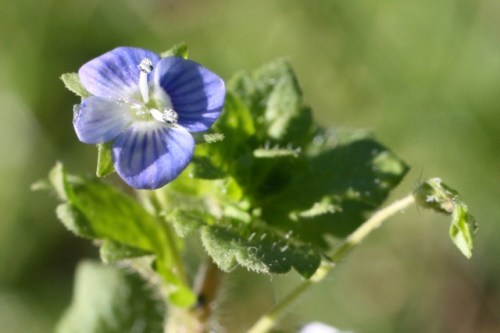
Veronica_persica2Patches of small blue flowers are blooming between the rows of winter beets and chard on a friend’s farm. This is winter speedwell, or Veronica persica. The local speedwells are easy to identify: look for little flowers with four petals, one noticeably smaller than the others. The other distinctive feature is a protruding pair of antenna-like stamens.

Winter speedwell has flowers that rise from the stem on long stalks (aka pedicels), so they stick out beyond the roundish, scallop-edged leaves. Some speedwells are native, but this one is not–though neither is it particularly invasive. Veronica_persica1

Leave a comment

Filed under Non-native, Plant of the day

“Plant” of the day: sudden oak death

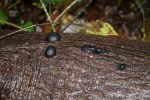
The killer that is laying waste to the oak trees of California is almost invisible. Sudden oak death got its name before anyone knew why the trees were dying; eventually the cause turned out to be Phytophthera ramorum. The only outward sign of infection is a dark, bleeding ooze that leaks down the bark. But a second fungus, hypoxylon, is almost always associated with the disease–this one fruits into a distinctive black growth that emerges from the bark and looks like a mound of dark, hardened foam. But inside the tree the infection is running rampant.

While tanoaks and several species of oaks are the most likely to die from the disease, several other species are carriers–including redwoods, rhododendrons, and pepperwood. The spores of Phytophthera can’t travel far; they rely on the splash and flow of rainwater to carry them. But hikers, bikers, and ATVs do a much more effective job of moving the infection from place to place. It can also spread on firewood and the equipment used to do tree work. The sad truth is that even if it moves slowly, certain trees–like tanoaks–have no resistance to this disease. Once it reaches them, they will die, and someday they are almost certainly going to be locally (if not totally) extinct.

Leave a comment

Filed under Invasive, Non-native, Plant of the day

Plant of the day: threecorner leek

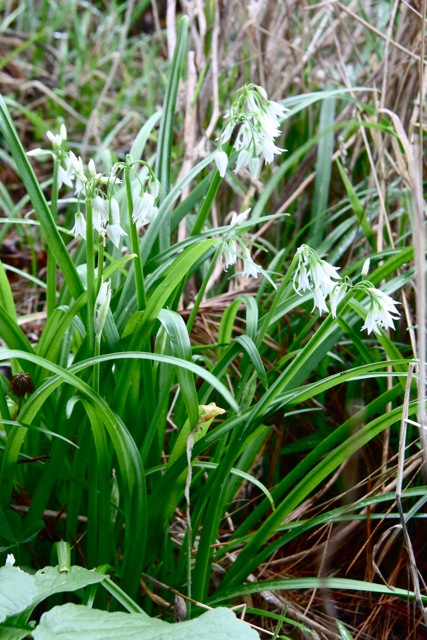
Allium_triquetrum2Is this little bloom early or late? We’re at the time of the year when it can be hard to tell. Threecorner leek (Allium triquetrum, also known as white flowered onion) is a pretty little weed that can cover entire meadows in the spring. The nodding white blossoms have six pointed petals, each decorated with a single green vein, and usually grow in clusters at the end of a leafless stalk.  The fleshy stem is triangular in cross-section, giving rise to its name. The rest of its name comes from its mild garlicky flavor and smell.

The flowers, leaves and bulb of the threecorner leek are all edible–you can add the leaves and flowers to a salad or eat them along the trail. Older leaves and the small bulbs are best cooked.

Allium_triquetrum1

Threecorner leek is native to Europe and Africa.

1 Comment

Filed under Edible, Non-native, Plant of the day

Plant of the day: brass buttons

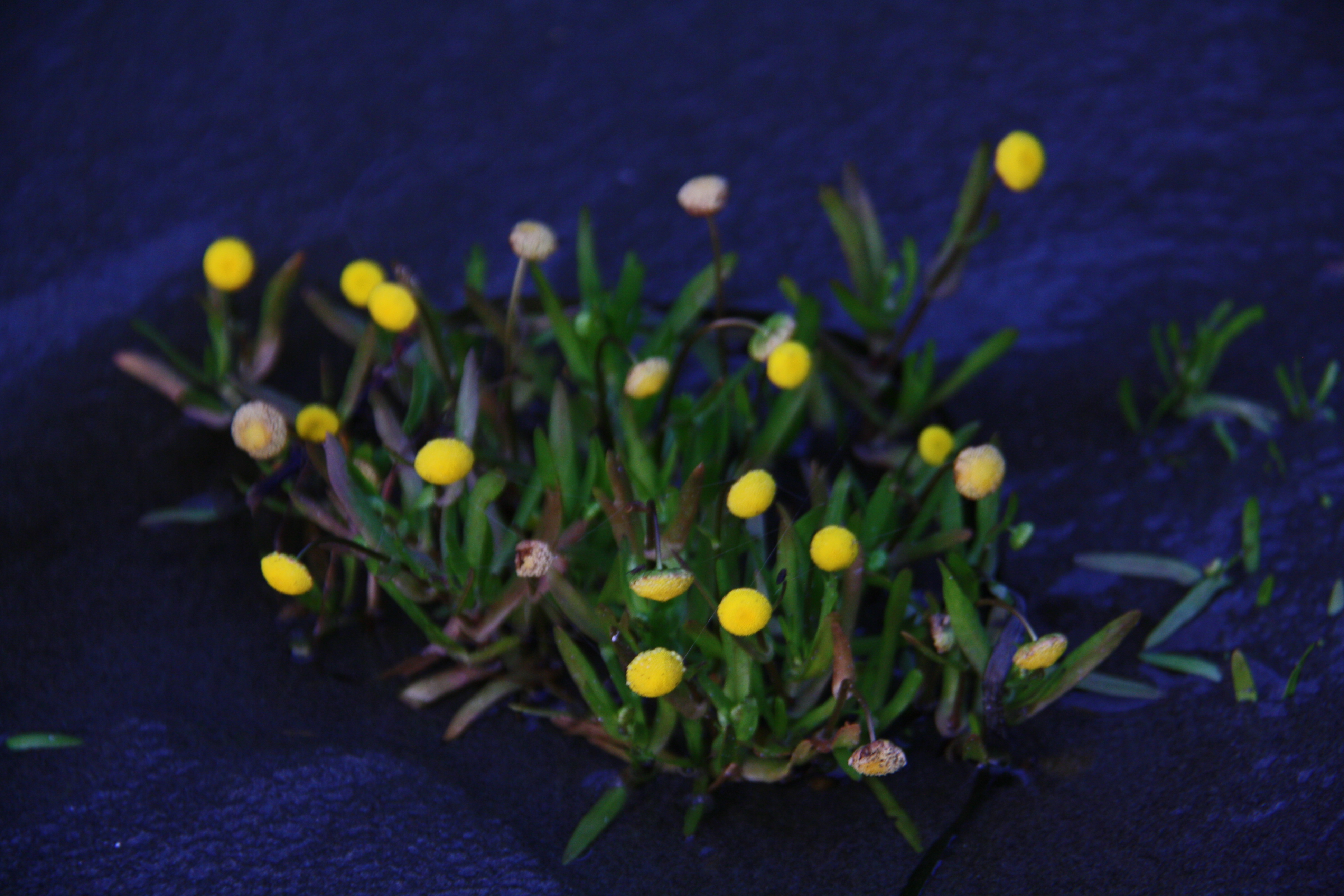
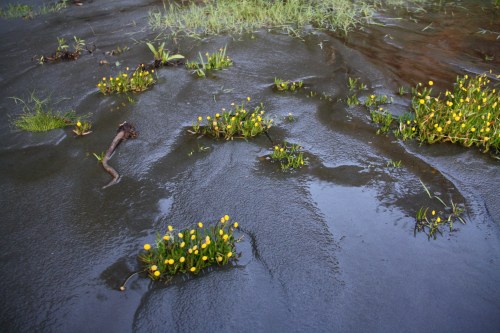
Small discs of gold gleam on a beach at twilight. It’s not pirate treasure–it’s a little, tiny, petal-less flower. Brass buttons (Cotula coronopifolia) can grow in both salt and fresh water marshes. I saw it growing in the sandy flats where a stream spread out flat across the beach before flowing into the ocean. Its small seeds are spread by birds or moving water, but it also can reproduce vegetatively, sprouting roots at the joints of its stems.

Brass buttons is a member of the Asteraceae family but it has only disc flowers–ie none of the typical daisy-like “petals”. Instead it looks like a little yellow pincushion. This is a non-native plant that was introduced from South Africa to California, but since it spreads slowly it isn’t known as a big ecological problem.

Leave a comment

Filed under Non-native, Plant of the day

Plant of the day: harding grass

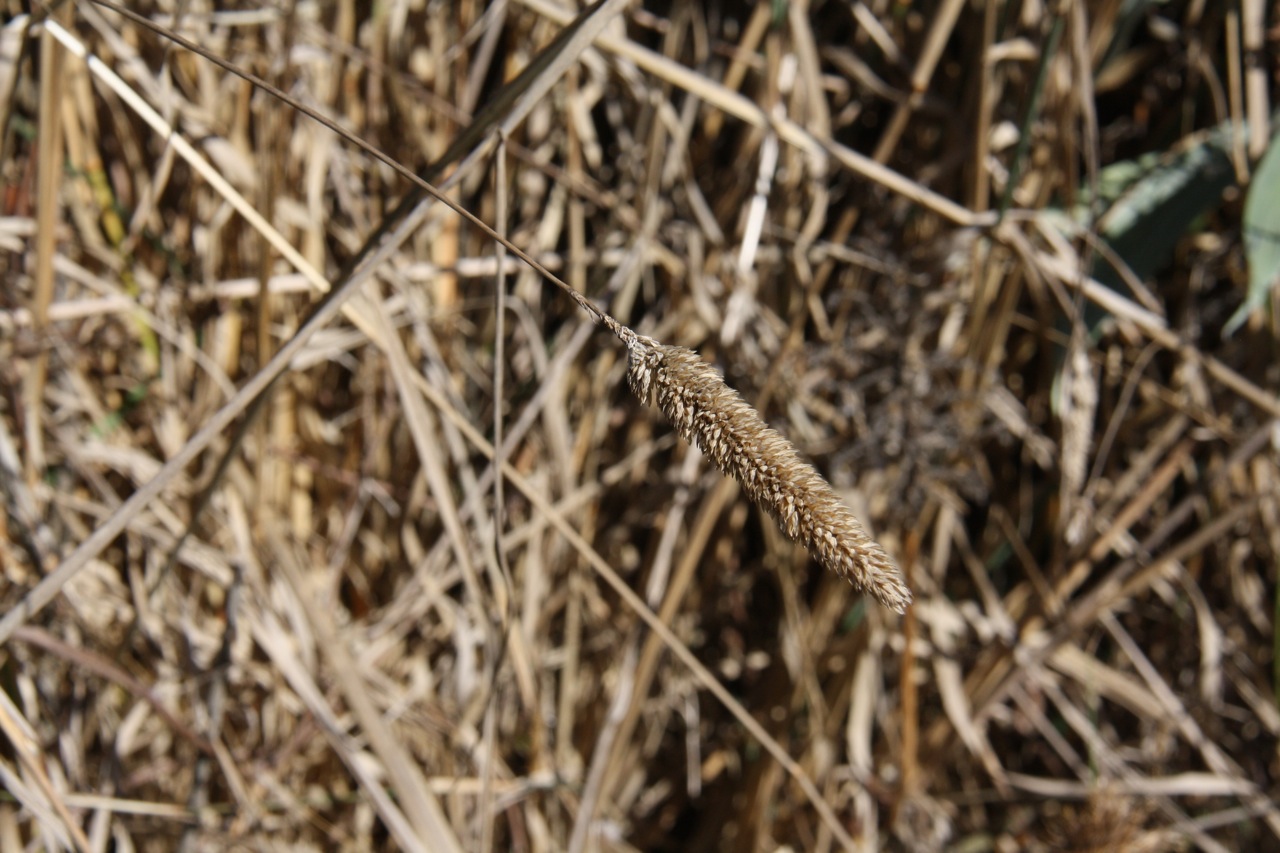
It’s going to be a long day away from the computer, so this one is going to be quick & dirty (hopefully updated later). This is harding grass (Phalaris aquatica), a nasty invasive that not only takes over fields, meadows and lawns but is the bane of hay-fever sufferers’ existence. Luckily it isn’t in bloom right now, but the dried stalks can still be standing tall.

It is another example of human hubris, as it was deliberately introduced to California for forage…

Leave a comment

Filed under Invasive, Non-native, Plant of the day

Plant of the day: fat hen

One doesn’t usually think of a salt marsh as a colorful place. It’s pretty much all green plants and brown mud, right? WRONG. Especially at this time of year. The pickleweed is looking like a Christmas decoration, fat little stems of mottled red and green with the bright orange threads of dodder twining around it. As if this weren’t color enough, great swathes of pink have begun to emerge.

This slideshow requires JavaScript.

Look close and you’ll see sprawling stems with slightly fleshy triangular leaves. Small seeds are also turning rosy, each small and spiky like a tiny spaceship. This is fat hen, or Atriplex prostrata, a non-native weed has naturalized here from Eurasia. The leaves are said to be bland but edible, and the seeds are as well–if anyone cares to take the time to collect them.

Also known as spear-leaved orache, it can be found growing in salt marshes and weedy places throughout the country.

Random fact: it inhibits the growth of potatoes if the two happen to grow near one another.

Leave a comment

Filed under Edible, Non-native, Plant of the day