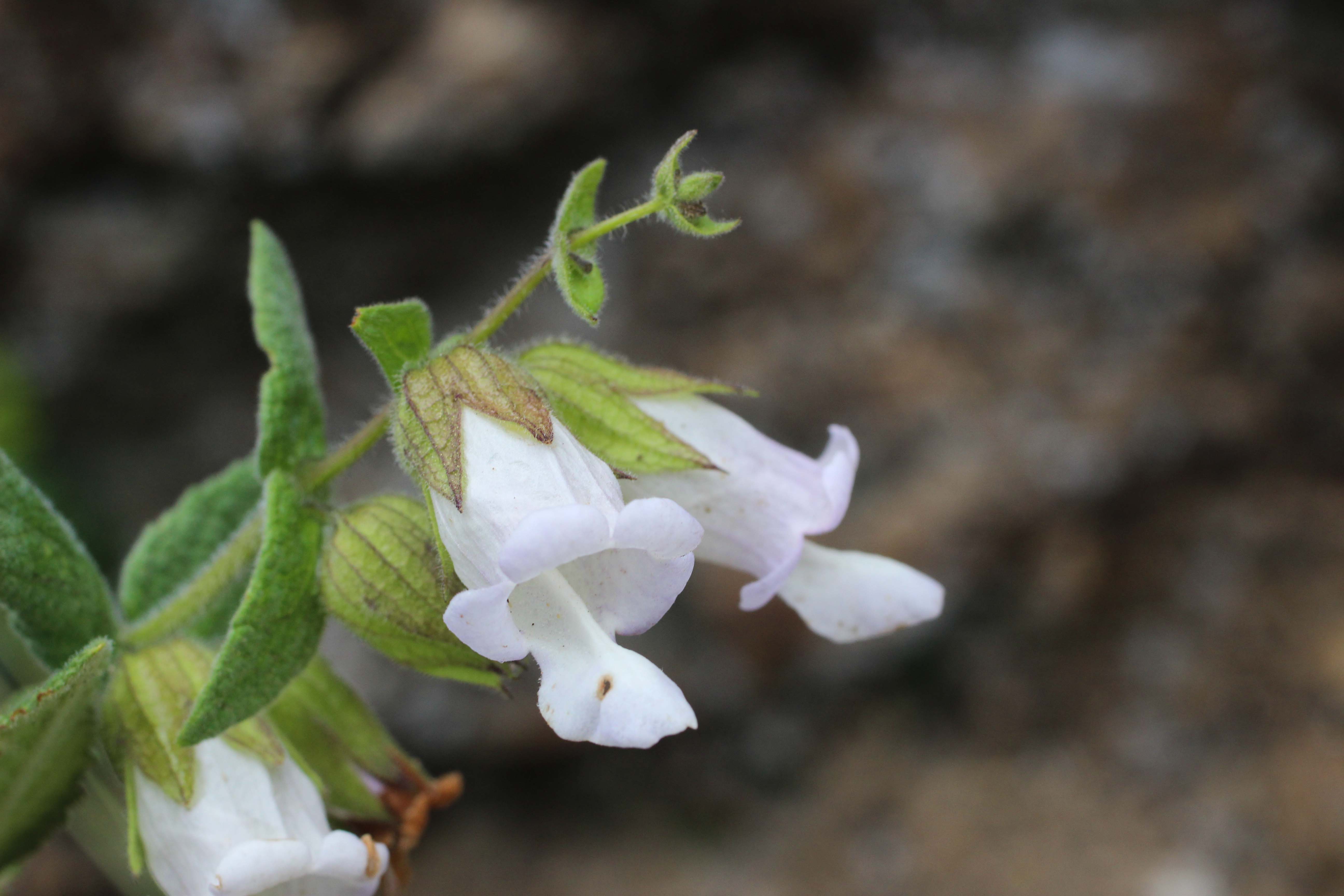
Plant of the day: pitcher sage

Lepechinia_calycina-2A bold bush with large white flowers and thick fragrant leaves grows abundantly along Old Railroad Grade. This is pitcher sage (Lepechinia calycina), likely named for its vessel-shaped flowers. Each large bloom is an inch or so long, and its lower lip protrudes out from the flower like a landing pad for pollinators. As it moves inward, this lip puckers into a distinctive ridge. The serrated, pungent leaves are large and thick with a wooly feel.

Unlike other species of native sage, Lepechinia is in the mint family. It was used medicinally by indigenous Californians to treat fever and headache, but despite the strong smell of its leaves I haven’t found any reference that it was used for cooking. Neither is there any mention of it being poisonous.

It is endemic to California, found from Lake to Ventura counties.Lepechinia_calycina

Leave a comment

Filed under Native, Plant of the day

Plant of the day: western azalea

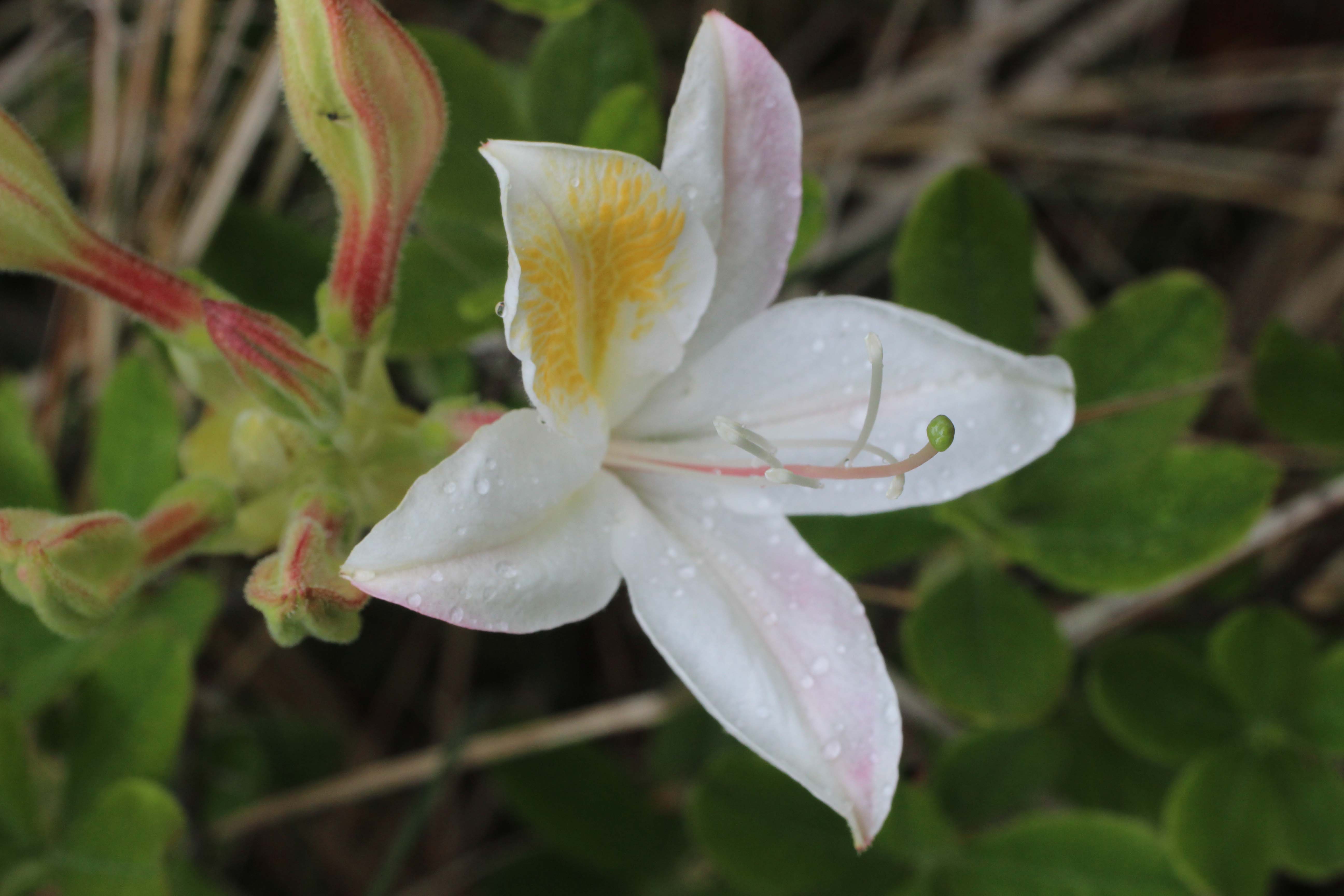
Rhododendron_occidentaleOn warm days, stands of azalea bushes exude a sweet and spicy fragrance. These shrubs in the rhododendron family are one of my favorite plants. The flowers are beautiful: large white trumpets have a splash of peachy orange on their upper lip, and a delicate array of long stamens. But the best thing about western azalea (Rhododendron occidentale) is their smell: it is the epitome of Californian summers. These shrubs prefer to grow on stream banks, and their pungent aroma is embedded in childhood memories of swimming holes and rock hopping. Even the leaves–pale green and slightly sticky–have their own fragrance. It’s a lovely thing. In My First Summer in the Sierra, John Muir said everybody must like this “charming shrub” not only for itself, but “also for the shady alders and willows, ferny meadows, and living water associated with it”.

Western azalea also grows in marshy flats, and I spotted the one photographed here at the Potrero Meadow picnic area. I have only seen azaleas blooming in late spring and early summer, but the Marin Flora says there are some plants near Rattlesnake Camp that have flowers almost all year round–a treat worth keeping an eye out for.

Leave a comment

Filed under Native, Plant of the day, Poisonous

Plant of the day: scythe-leaf onion

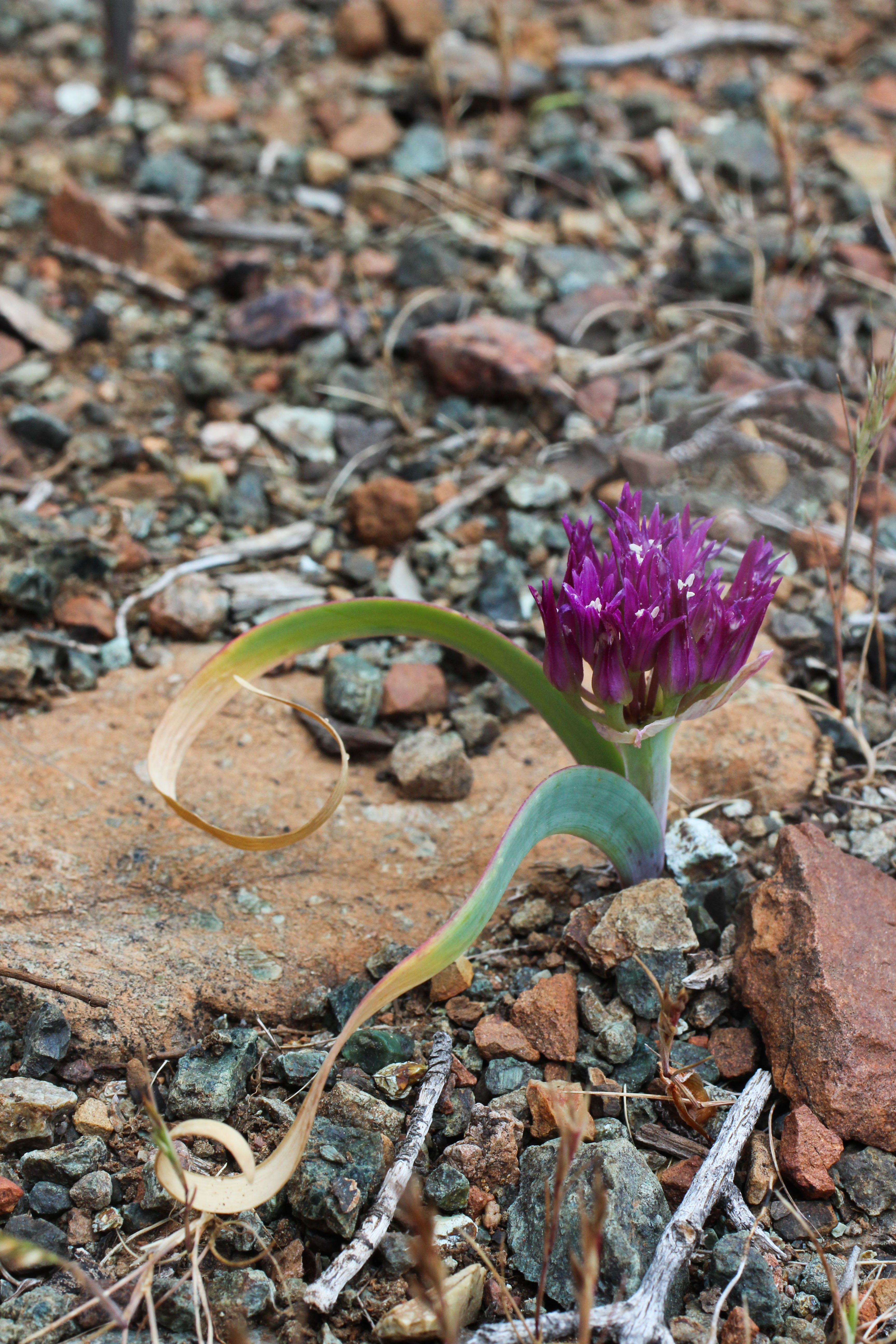
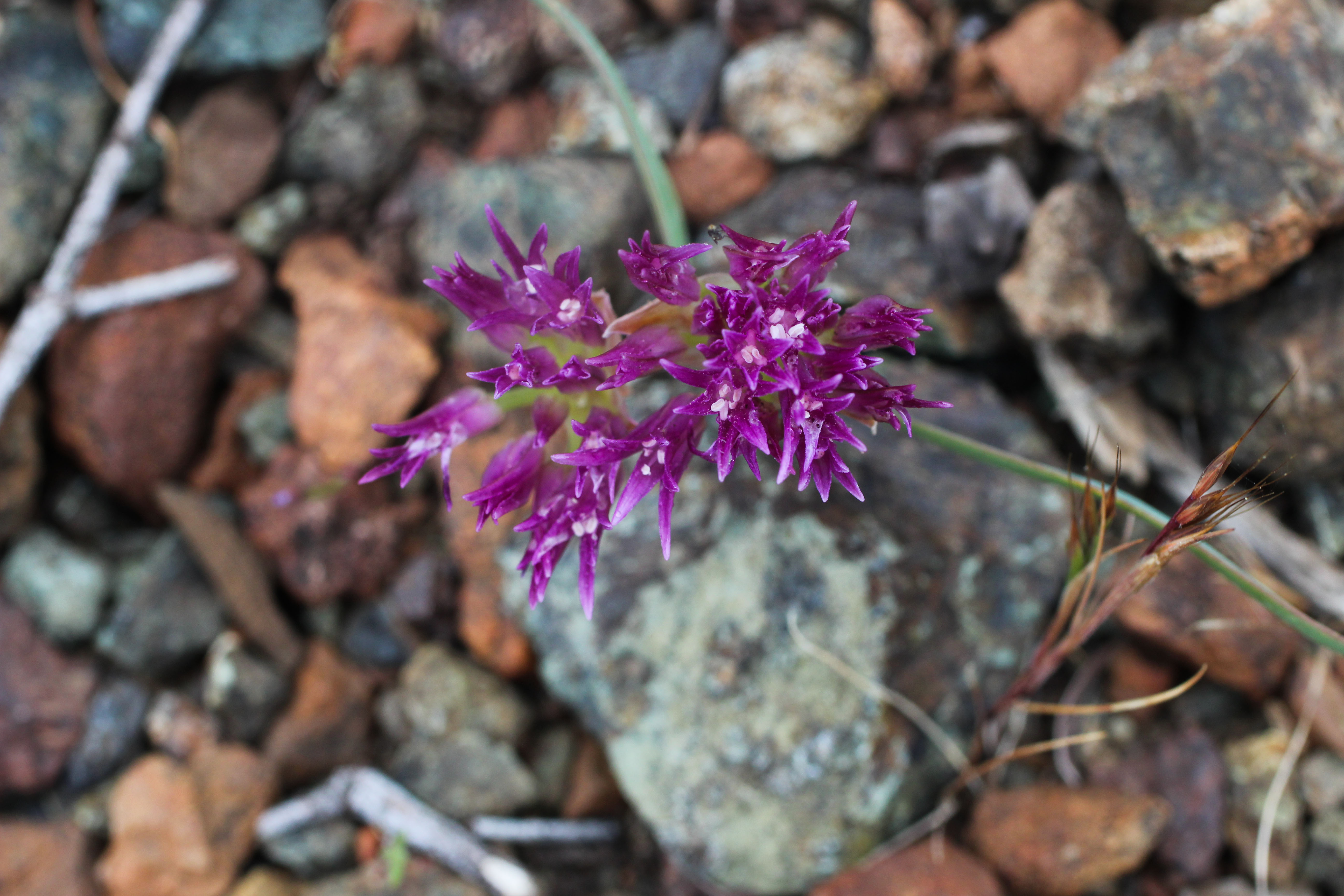
IMG_6626Clusters of purple flowers are perched like tiny bouquets on the barren soil of a serpentinite outcrop. Each flower emerges directly from the earth, attended by one or two curling, blade-like leaves. This is scythe-leaf onion (Allium falcifolium). Its flowers are only about a centimeter long–brilliant fucshia-colored funnels with six white stamens inside. The leaves are a dusty shade of green.

According to the Manual of Pacific coast drug plants, Native American tribes used scythe-leaf onion for food, and it was used medicinally as a diuretic. It grows on rocky, well-drained soils and has a strong preference for serpentine. Look for it from Santa Cruz to the Siskiyou Mountains of southern Oregon. IMG_6633

Leave a comment

Filed under Native, Plant of the day

Plant of the day: bush poppy

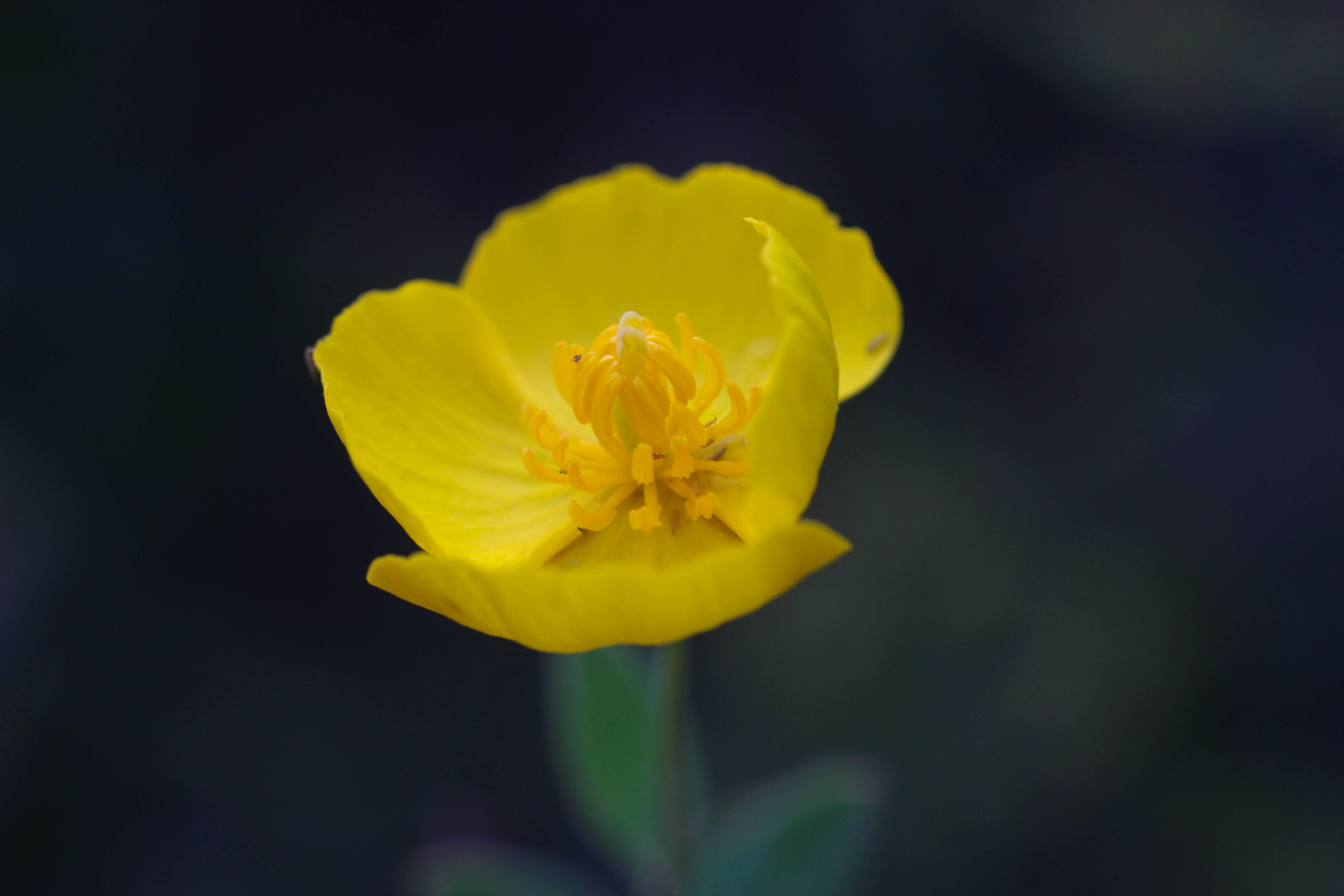
Dendromecon_rigidaBush poppy was a stunning sight in a fog-soaked hike atop Mt. Tamalpais today. The brilliant yellow flowers adorn the chaparral like jewels. Each blossom can be a few inches across, with four delicate petals surrounding a slightly orange mound of stamens. The leathery, gray-green leaves also are attractive.

Bush poppy (Dendromecon rigida, also known as tree poppy) can grow up to nine feet tall, though all the ones I have seen have been much smaller.  You can find it in coastal chaparral, and also in the foothills of the coast ranges and the Sierras up to 6,000 feet. It thrives in well-drained, rocky soil; I saw it along the red-dirt cut banks of the Rock Spring trail on the east side of the mountain.

The photo above, which only shows the blossom, doesn’t do this plant justice–it really is a striking shrub, especially as a splash of color in the muted tones of the chaparral.

Leave a comment

Filed under Good for gardens, Native, Plant of the day

Plant of the day: croftonweed

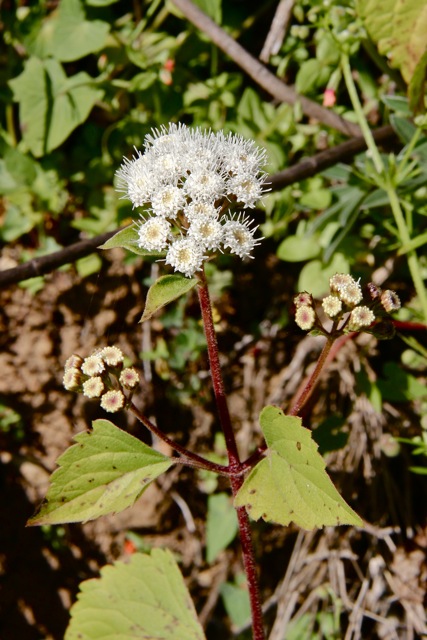
Ageratina_adenophoraThis tuft-topped weed is thriving in the roadside ditches above the ocean. Croftonweed (Ageratina adenophora) )is an invasive, introduced from Mexico that has spread throughout California’s coast ranges. It reproduces asexually as well as through its abundant seeds, and is particularly aggressive in a coastal habitat. It’s considered a noxious weed in Asia, Australia, New Zealand and Hawaii.

It was originally introduced to California as an ornamental plant. In Marin County, you can see a lot of it growing along Panoramic Highway above Stinson Beach.

Leave a comment

Filed under Invasive, Native, Plant of the day

Plant of the day: yerba buena

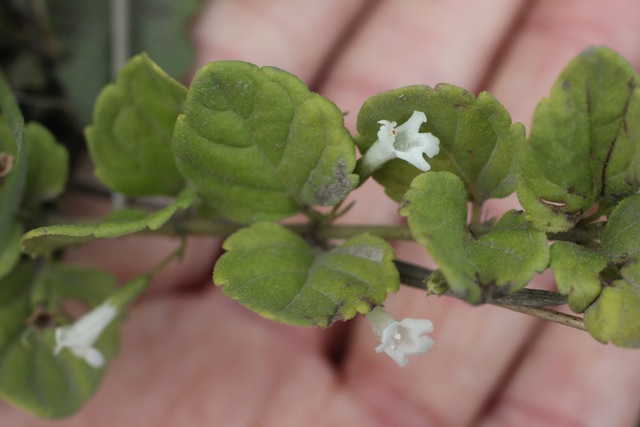
Clinopodium_douglasii1This inconspicuous, trailing plant is one of the most prized herbs of the west coast. It has a strongly sweet, slightly minty flavor that made it valuable for both cooking and medicine. The city of San Francisco was named Yerba Buena until 1847; in Spanish, the phrase literally means “good herb”.

Yerba buena (Clinopodium douglasii) is a dainty little plant. It is widespread in the area, growing in the coastal scrub and deep under the redwoods. You can find it from Alaska to Los Angeles county. The paired leaves are a light spring green but often are tough and slightly sandpapery to the touch–though in sheltered, shaded places they can be quite delicate. In the spring, tiny white flowers appear along the stem, at the base of the leaves. It spreads from woody rhizome, but the prostrate stems also can grow roots, which is why you’ll often see it growing as a sparse, leggy mat.

The plant was used to season food, as a tea, and as a perfume; hunters would rub the leaves on their skin to disguise their odor from game. Yerba buena was taken medicinally to treat colds, fevers, pinworms, insomnia, kidney problems, toothaches, colic, upset stomach, thinness, and to become thin. It was also used as an aphrodisiac. Clinopodium_douglasii2

Leave a comment

Filed under Edible, Good for gardens, Medicinal, Native, Plant of the day

Plant of the day: rosy iceplant

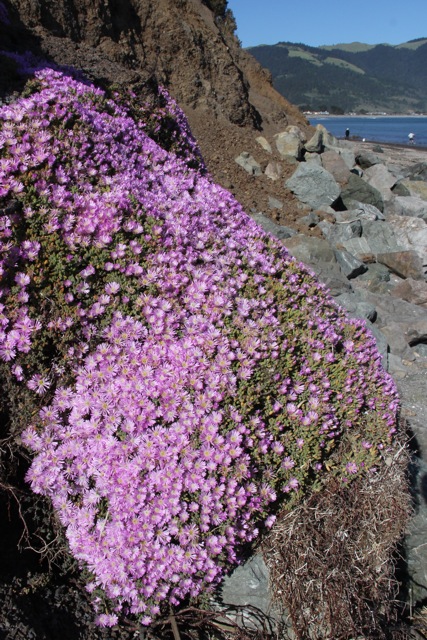
Drosanthemum_floribundum1A blanket of color is draped across a bare cliff face above the beach. Gray-green succulent leaves–shaped like tiny sausages–form a dense mat that in turn is covered with bright pink flowers. Though the blooms look like daisies at first glance, they are actually in a totally different family (the yellow centers really are many stamens, not individual flowers). This is rosy iceplant or Drosanthemum floribundum.

Rosy iceplant has a very different look from the much more common (and invasive) iceplant, Carpobrotus, though it is in the same family. Common iceplant has large wedge-shaped leaves the size of crisp green french-fries, and the flowers are much larger. The little leaves of rosy iceplant are only about 1cm long.

This native to South Africa was originally planted to control erosion, according to the Marin Flora. It spreads easily, rooting at the stem nodes, and has expanded from large patches near Duxbury Reef in Bolinas into many other parts of Marin.

It is also known as showy dewflowerDrosanthemum_floribundum2

Leave a comment

Filed under Non-native, Plant of the day

Plant of the day: red clintonia

I’ve been keeping my eye on the clintonia.

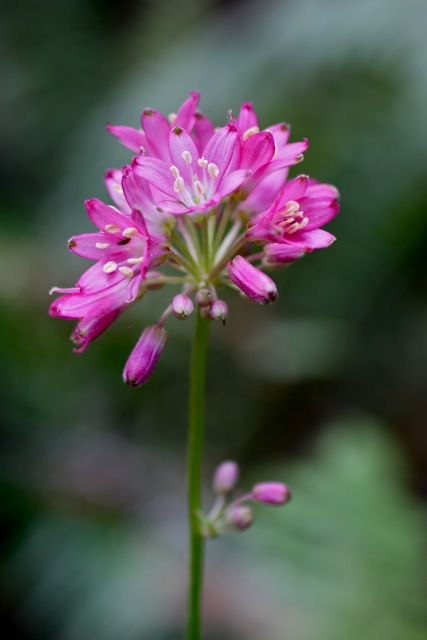
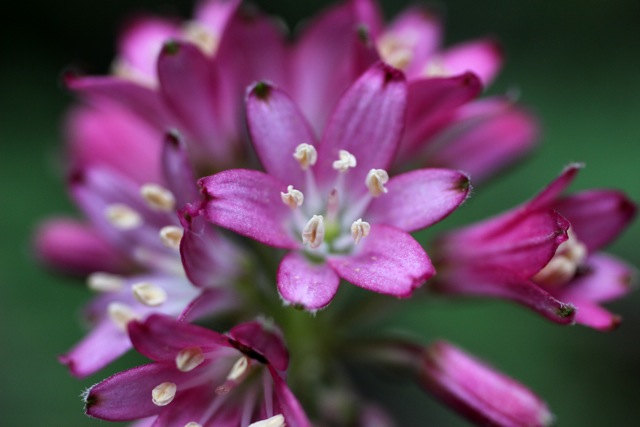
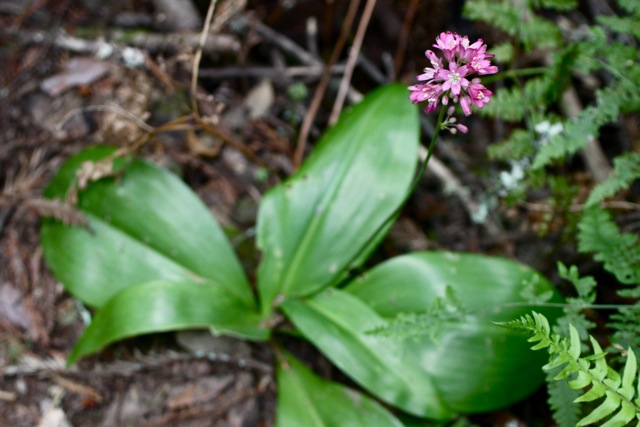
Clintonia_andrewsiana2For much of the year, these perennial lilies simply look like a pile of green, tongue-shaped leaves that sit unchanging on the forest floor. But in the springtime, they reward hikers with a dense cluster of brilliantly pink flowers atop a leafless stalk. There are masses of them along the Steep Ravine trail; when I was there a week ago the flowers looked just about ready to bloom–they are sure to be a lovely sight when they do. Later in the season, the flowers will be replaced by glossy blue-black berries that look like a stylized starburst, exploding from a single point on the end of slim pedicels.

Red clintonia (Clintonia andrewsiana, also known as Andrew’s clintonia or blue-bead lily) generally grows under redwoods. Its range is restricted to the coast of Northern California, extending slightly into Oregon. Its berries are pretty but probably toxic–definitely don’t eat ’em.Clintonia_andrewsiana3Clintonia_andrewsiana1

Leave a comment

Filed under Native, Plant of the day, Poisonous

Plant of the day: changing forget-me-not

Myosotis_discolor1It’s easy to miss this teeny-tiny little forget-me-not (Myosotis discolor). Its flowers look just like those of its larger cousin–but they are just a millimeter across (sometimes as large as 3mm). They unfurl in a tiny, fuzzy curl and you have to look close to even see the color at all. They aren’t native–their homeland is Europe–but they aren’t particularly invasive either, and for some reason I find them delightful.

Once you train your eye to spot them they are surprisingly common, thriving in moist coastal grasslands (though from the map, their range seems to include mountains as well). Look for this little plant in all coastal states on both the east and west coast.

1 Comment

Filed under Non-native, Plant of the day

Plant of the day: Oregon anemone

Anemone_oregana1

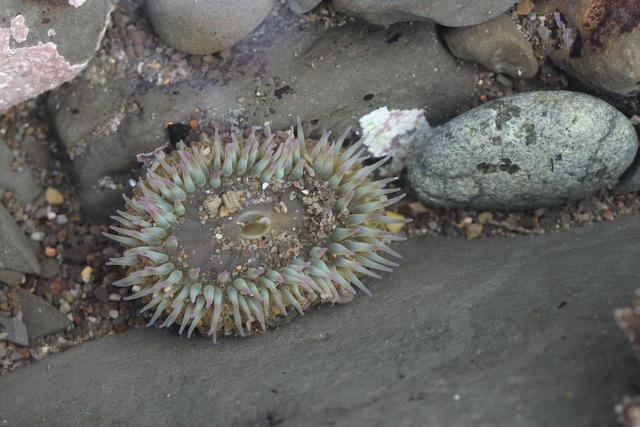
Not this kind of anemone

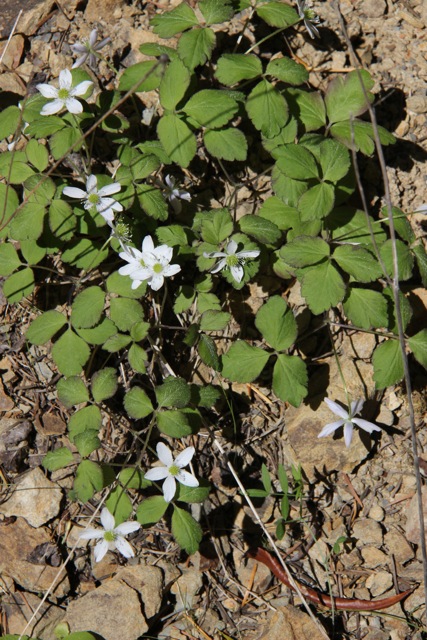
The Oregon anemone is a delicate little flower with many central stamens. Like the sea creature it shares a name with, Anemone oregana does not have petals. Unlike the sea creature it does appear to have petals. But it’s a trick; actually those are sepals that, instead of being green and leafy are colorful, delicate, and–well–basically look like petals. These not-petals can be white, blue, or pink.

The flowers grow in many-stemmed mounds of three-parted leaves. Oregon anemone (also known as blue windflower and western wood anemone) is generally found in moist canyonsides, often under redwoods. According to the Marin Flora, it has been spotted locally including in Mill Valley, Muir Woods, and Lagunitas canyon. I spotted the ones shown here up in Sonoma County. This pretty bloom can be found in the springtime from central California up into Washington.

UPDATE: The flower shown here is actually Anemone grayii, which was recently split off from Anemone oregana. As far as I can tell, the easiest difference between the two to spot is that the peduncle (flower stalk) of the former is lightly to shaggily coated with little hairs, at least towards the top. It also doesn’t come in the pink form. If you really want to dive into the details, you can compare the descriptions of each in the Jepson database. Thanks to Doreen for pointing out the name/taxonomic change!

Anemone_oregana3

Oregon anemone, a.k.a blue windflower & western wood anemone

Anemone_oregana4

Notice the three-parted leaves

4 Comments

Filed under Native, Plant of the day